Showing posts with label usshoustonca30. Show all posts

18 January 2011

Japanese Companies and the U.S.: A Shared Dark History

Picture from here


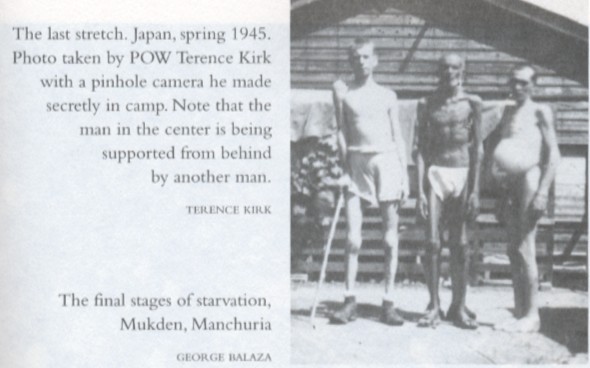
This post is about something that has caused me a large loss of confidence in our country's protection and appreciation of our veterans. When I was in college, I wrote my senior thesis on some of the POWs , formerly of the heavy cruiser Houston, held by Japan. I learned that many of the POWs had not only been used as slave labor to build the bridge on River Kwai, but also used as slave labor in many industries that are well known today. The businesses were never penalized for their treatment of our men. If you follow this link you can see a short video about this (embedding for this video is not allow; that's why you need to follow link). I read of this in my research in a book by Linda Goetz Holmes titled Unjust Enrichment: How Japan's Companies Built Postwar Fortunes Using American POWs. The U.S. government has consistently forbidden former POWs from suing these Japanese companies. What can we do to put a hurting on them? We can stop buying any products made from these companies and to be sure that they're not making money off of Americans just stop buying ANYTHING made in Japan. It is shameful that our own country won't force Japan to pay reparations to our heroes when we paid reparations to the Japanese Americans who were were sent to relocation camps. Is a military person any less deserving than a civilian? I don't think so. Perhaps our country should pay the survivors instead of Japan. Unfortunately, there are few survivors left so we better get a move on before they're all gone.


More articles on this topic:


Search Amazon.com for Unjust Enrichment: How Japan's Companies Built Postwar Fortunes Using American POWs

28 February 2010

Just Before Midnight, 28 Feb 1942, USS Houston CA 30 Engages Japanese ...


On February 28, the USS Houston CA30 and the HMAS Perth proceeded to the port of Batavia in western Java, and partially refueled before attempting that night to pass through Sunda Strait in an effort to reach the safer waters of the Indian Ocean. As they approached the entrance to the strait near midnight, they unexpectedly encountered a Japanese covering force of nearly one dozen destroyers, three cruisers, and numerous torpedo boats and minesweepers that were protecting the invasion fleet. In the ensuing Battle of Sunda Strait, the Houston and Perth both aggressively fired at the attacking Japanese ships at close range, but, outnumbered and outgunned, they were no match for the enemy forces that completely surrounded them. Four torpedoes sealed the fate of the Perth shortly after midnight. Soon after, the first torpedo struck the Houston, and another Japanese shell destroyed her number two eight-inch turret, at which point Captain Rooks gave the order to abandon ship.
Tragically, one of the incoming Japanese shells struck a gun mount, killing Captain Rooks. The abandon ship order was countermanded and the Houston continued to fight, now alone against the Japanese fleet. She managed to hit three destroyers and sink a minesweeper before three more torpedoes ripped into the ship.
Hit by four torpedoes and listing to starboard, the Houston was doomed. The Japanese turned on their searchlights and continued to blast the ship. Captain Rooks and the majority of the crew were already dead. As a second order was given to abandon ship, the remaining crew members jumped over the sides, then began swimming furiously away from the suction of the sinking ship.
In the water, Japanese torpedo boats were machine gunning escaping sailors. Those who could avoid the gunfire began swimming through the dark, oil-coated water towards the Java shore, many miles away. Terrible as the experience of the last few days had been, their ordeal was just beginning.  (Information from University of Houston Special Collection).


When I was in college, I wrote my thesis on the sinking of this ship and the heroic crew.  The ship was substandard and the men did the best they could.  I was fortunate to attend a reunion/ memorial ceremony in 2002 and again in 2003.  The survivors I spoke with were friendly and more than happy to answer my questions. A bit of trivia, their experiences as POWs of the Japanese were used for the movie Bridge on River Kwai.

05 August 2008

08-05-2008 USS Houston CA30 Sunk During WWII

I was honored to meet and correspond with some of the survivors from the USS Houston back in 2002. I wrote my college thesis on the heroes of this ship wreck. The ones I met were humble men and surprisingly did not hold a grudge against their captors. Back in 2002, the survivors received back pay from the advancements they were eligible for during their captivity. These pay raises were in WWII dollars without interest being paid. I have a cousin (once removed) and her half-brother was killed in the Battle of Makassar Strait the previous month. Anyway, before you watch this video, scan over to the music player and turn the music off so that you can hear this video without interference.

For more information

Enjoy...

15 June 2008

Entry for March 02, 2008


Entry for March 02, 2008
I am actually a day late posting this entry. On March 1st, 1942, the USS Houston CA -30 was sunk by the Japanese. I have a great interest in this battle. As a matter of fact, when I was in college, I wrote my senior thesis on this subject. Go to here to see a website sponsored by the survivors, their families, and other interested parties. It is a very informative site. The survivors went through hell for several years and treatment by the Japanese captors was an extreme example of inhumanity. Our men were starved, beaten, overworked, denied medical care, and murdered. These POWs were the ones whose experiences the movie Bridge on River Kwai was based on. Please visit their site for more information.
Photo from http://www.chinfo.navy.mil/navpalib/ships/cruisers/history/cghist4.html
(Originally posted on my Yahoo 360 blog)